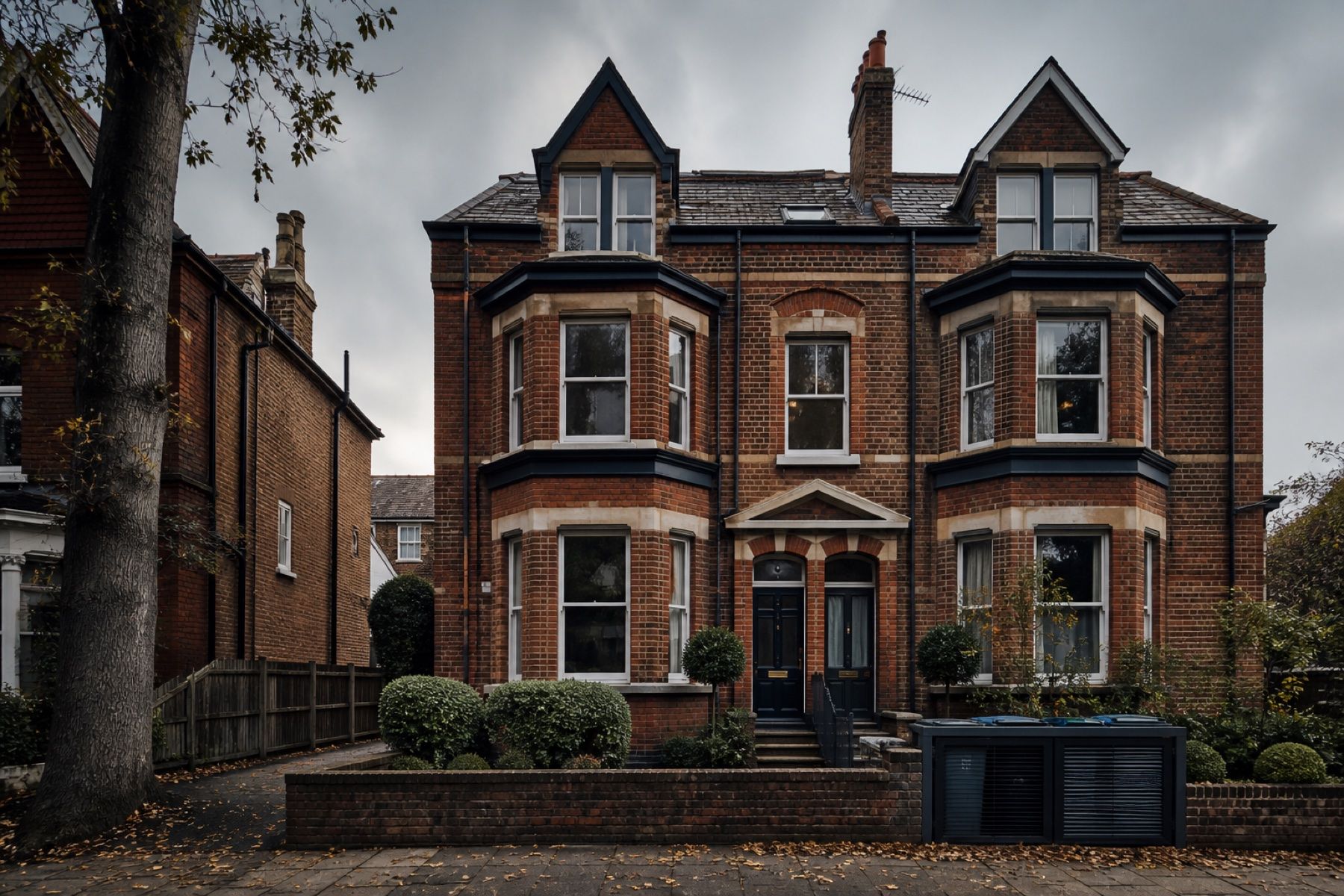
HMO conversion finance for commercial buildings and large houses
HMO conversion finance is short-term lending, usually a bridging loan, that funds the purchase and conversion of a building into a house in multiple occupation, and is repaid by refinancing onto an HMO mortgage once the property is licensed and let. The bridge does the heavy lifting while the building cannot yet be mortgaged: during planning, during the works and during the first lettings.
This page covers conversions: turning an office, a pub, upper floors above shops or a large family house into an HMO. If you are buying or refreshing a property that is already a working HMO, our HMO bridging loans page is the better starting point.
Key takeaways
HMO conversion finance uses a bridge to buy and convert, then refinances onto an HMO mortgage once the property is licensed and let.
Commercial buildings and large HMOs almost always need planning permission; small HMOs may not, unless an Article 4 direction applies.
The refinance depends on the valuation basis, so choose the exit lender before you buy.
Allow enough term for works, licensing and lettings, not just the build.
If you or a close family member will live in part of the building, the loan may be regulated, and we introduce it to an FCA directly authorised firm.
)}
What is an HMO conversion?
An HMO conversion changes a building so that it can be let to three or more people from more than one household who share facilities such as a kitchen or bathroom. In practice we see three types of project:
House to small HMO: a family house converted for three to six sharers (use class C4).
House or building to large HMO: seven or more sharers, which is a sui generis use and needs planning permission.
Commercial building to HMO: offices, former pubs, upper floors above retail or redundant community buildings. These almost always need full planning permission, because Class MA leads to self-contained flats rather than shared housing.
Commercial buildings are where bridging earns its keep. A mortgage lender will not lend on a vacant office while it is being turned into bedsits, but a bridging lender will, provided the planning, the works and the exit stack up. For conversions to self-contained flats instead, see commercial to residential conversion finance.
How does HMO conversion finance work from purchase to refinance?
Most HMO conversion finance follows the same path, often called bridge, refurbish, refinance:
Buy with a bridging loan. The bridge completes the purchase on a first charge, lent against current value. Auction purchases work the same way, within the usual 28-day completion.
Fund the works. Light works can sit inside one facility. Heavier works such as new bathrooms throughout, fire separation, structural alterations or extensions are released in stages after a monitoring surveyor inspects each phase.
Licence and let. Once the works are signed off, you apply for the HMO licence where required and fill the rooms.
Refinance. The bridge is repaid by an HMO mortgage, ideally sized on the converted value.
The term needs to cover all four stages with room to spare. A bridge that runs out the week the last tenant moves in leaves no margin for a slow licence or a down-valuation. Our page on refurbishment bridging loans explains how staged drawdowns are structured.
What do lenders need on planning, Article 4 and licensing?
The planning and licensing position is the first thing an HMO lender checks, because it decides whether the exit mortgage will ever be available.
Project
Planning position
Licensing
What the lender wants
House to small HMO (3 to 6 sharers)
Often permitted development, unless an Article 4 direction removes it
Mandatory licence at 5 or more sharers from 2 or more households; councils may add their own schemes
Confirmation there is no Article 4 direction, or planning permission if there is
Large HMO (7 or more sharers)
Sui generis use: full planning permission needed
Mandatory licence
The planning consent and its conditions
Commercial building to HMO
Full planning permission in almost all cases
Mandatory or additional licence, depending on size and the council
Consent, approved drawings and a fire strategy
Article 4 directions are the trap. Many university towns and city wards have removed the permitted development right to convert a house to a small HMO, so a scheme that works on one street needs planning on the next. Licensing brings its own standards, including minimum room sizes for sleeping rooms and amenity standards set by the council. Confirm the position with the local authority or a planning consultant before you exchange.
Have a deal in front of you?Send us the property and the numbers. We will tell you quickly whether it is fundable.
How do lenders value an HMO conversion?
Valuation drives both the size of the bridge and the success of the refinance, so it pays to understand the two bases valuers use:
Basis
How it works
When it is used
Bricks and mortar
Value as if it were a single house sold with vacant possession, using comparable house sales
Smaller HMOs, and many lenders' default view
Investment (yield) basis
Value based on the rental income and a market yield, closer to a commercial valuation
Larger HMOs and lenders with a commercial approach to HMO lending
The day-one valuation on the bridge reflects the building as it stands: often a vacant shell or an outdated office. The refinance valuation reflects the finished HMO. If your plan depends on an investment-basis valuation at exit, we choose a refinance lender that uses that basis and, where possible, get the exit lender's view before you buy. That is the difference between pulling your money out of a project and leaving it stuck in the walls.
How much does a HMO conversion cost?
Costs vary hugely with the starting point. A tired house needing new bathrooms is a different project from a former office needing a new layout, but the budget headings are the same:
Purchase costs: price, legal fees and stamp duty. A commercial building attracts non-residential SDLT in England (0% to £150,000, 2% from £150,001 to £250,000, 5% above £250,000); a house attracts residential rates. Take advice from your accountant or solicitor.
Building works: ensuite bathrooms, kitchens sized for the number of sharers, fire doors, fire detection and alarm systems, emergency lighting, sound insulation and any structural alterations.
Compliance: planning fees, building control, licence fees and any works the council requires before granting the licence.
Furnishing and lettings: most HMOs are let furnished, and void periods during letting cost money.
Finance costs: monthly interest (usually retained or rolled up), an arrangement fee typically around 1% to 2% of the loan, valuation and legal fees, a monitoring surveyor on heavier works and, with some lenders, an exit fee.
Run the whole period through our bridging cost calculator and add a contingency. Lenders will ask for a schedule of works and will compare it against what they see elsewhere.
Is it hard to get a HMO mortgage for the exit?
It is harder than a standard buy to let, but very achievable when the property is right. HMO mortgage lenders typically look at:
Experience: some want prior landlord or HMO experience, especially for larger HMOs or limited company borrowers.
Licence and planning: evidence that the HMO is lawful and licensed where required.
Rental income: the room rents must cover the mortgage payments by the margin the lender sets.
Layout and room sizes: rooms that meet licensing standards and a sensible ratio of kitchens and bathrooms to sharers.
Are HMO mortgages more expensive? Generally, yes. Lenders price HMOs above single-let buy to let because management is more intensive and the pool of lenders is smaller, and arrangement fees can be higher too. That is why we look at the exit before the bridge: a low-cost bridge is worthless if the refinance cannot be done. For more on exits, see our guide to bridging exit strategies.
Is HMO conversion finance regulated or unregulated?
Most HMO conversion finance is unregulated, because the borrower is an investor, often a limited company or SPV, and nobody connected to them will live in the property. We arrange those loans directly.
The position can change if you or an immediate family member will live in the building, for example a live-in landlord who keeps a room or a flat within the HMO.
A bridge to an individual or trustees is a regulated mortgage contract where at least 40% of the property is used, or intended to be used, as a home by the borrower or a related person. We introduce every case where you or your family will live in the building to a firm directly authorised by the Financial Conduct Authority, so that test is applied properly. We are not directly authorised by the Financial Conduct Authority, so we will flag this at the outset rather than part way through.
For longer-term finance on this type of property, see our sister site HMO Fund.
Unregulated commercial and investment bridging is arranged directly. Any case where the security includes a home you or an immediate family member occupies, including a flat above commercial premises, may be regulated and is introduced to a firm directly authorised by the Financial Conduct Authority. We are not directly authorised by the Financial Conduct Authority ourselves. Your property may be repossessed if you do not keep up repayments on a mortgage or any other debt secured on it.
It is the process of converting a building so it can be let to three or more people from more than one household who share facilities such as a kitchen or bathroom. That can mean a family house turned into a small HMO, a building converted into a large HMO for seven or more sharers, or a commercial building such as an office or pub converted to shared housing.
How much does a HMO conversion cost?
It depends on the starting condition, the number of rooms and what the council requires for the licence. Budget for purchase costs and stamp duty, building works including ensuites and fire safety, planning and licence fees, furnishing, void periods and finance costs. We would not quote a per-room figure without seeing the scheme, but we will test your budget against lender expectations.
Is it hard to get a HMO mortgage?
It is harder than a standard buy to let mortgage, but achievable for a well-run property. Lenders look at your experience, the licence and planning position, the rental income, room sizes and layout. Some want prior landlord experience for larger HMOs. Choosing the refinance lender before you buy reduces the risk that the exit fails at the end of the bridge.
Are HMO mortgages more expensive?
Usually, yes. HMO mortgages tend to be priced above single-let buy to let lending, and fees can be higher, because the properties are more management intensive and fewer lenders offer them. Larger HMOs valued on an investment basis can support bigger loans, so the right lender choice matters more than the headline price.
Can I use a bridging loan to convert a commercial building into an HMO?
Yes. A bridging lender will lend against the building as it stands and fund the works in stages, which a mortgage lender will not do on a vacant commercial building. You will normally need full planning permission for the change of use, plus a clear schedule of works and an exit plan to an HMO mortgage or sale.
How long should the bridging term be for an HMO conversion?
Long enough to cover the works, building control sign-off, the licence application, letting the rooms and the refinance process. For most conversions that means 9 to 18 months. A slightly longer term costs little if you repay early, while running out of term can be expensive.