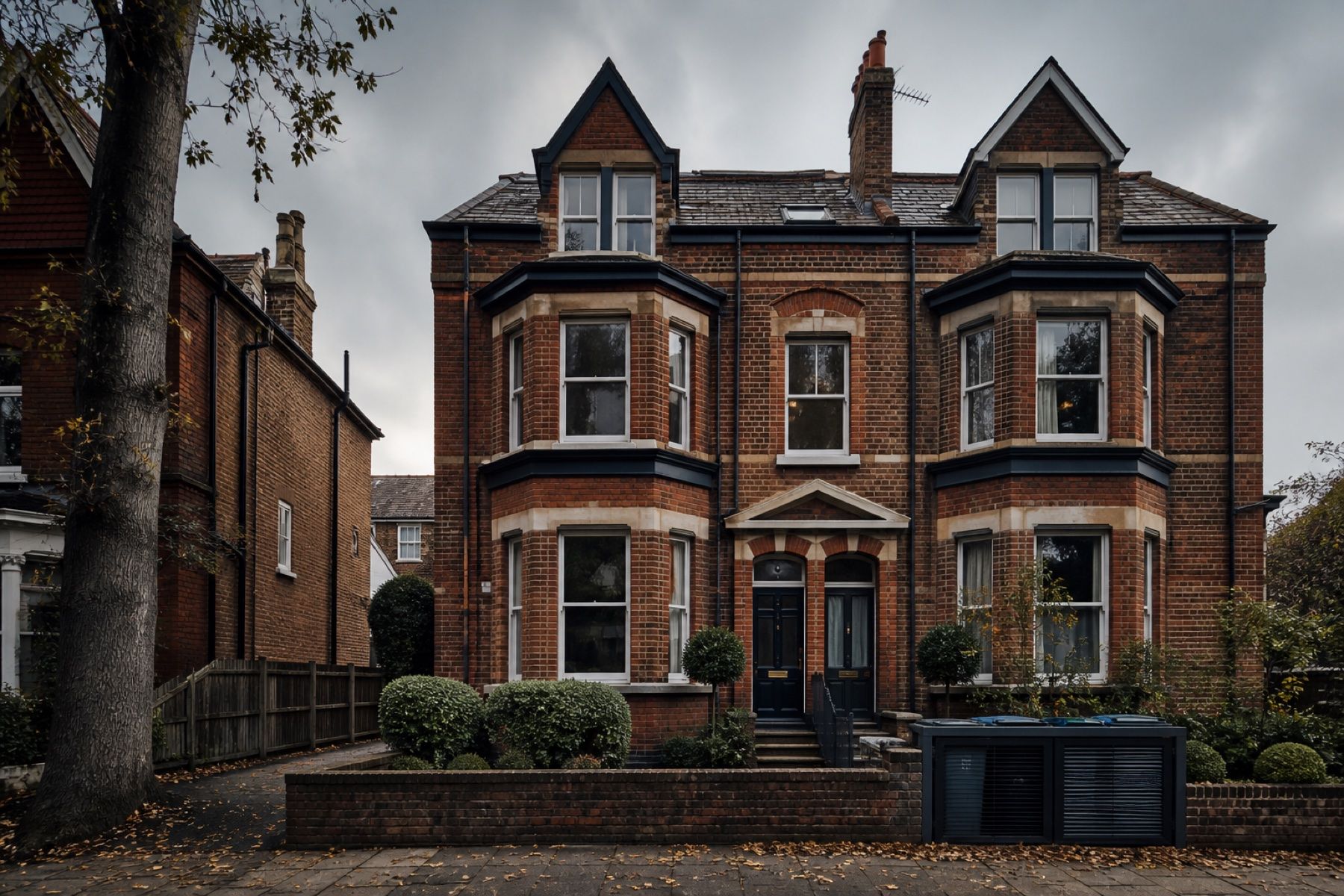
An HMO bridging loan is short-term finance secured on a house in multiple occupation that lets you buy, refurbish or bring an HMO up to licensing standard quickly, then repay by refinancing onto an HMO mortgage or selling. We arrange HMO bridging finance for landlords and investors through a wide panel of bridging lenders, from specialist lenders to private credit funds.
HMOs sit between residential and commercial lending. A six-bed shared house may be valued like a family home, while a twelve-bed licensed HMO with strong rents may be valued on its income. The difference between those two approaches, together with licensing, Article 4 and planning status, decides how much you can borrow and whether your refinance will work. If you are converting a building into an HMO from another use, our HMO conversion finance page covers that route.
Key takeaways
Whether an HMO is valued on bricks and mortar or investment value drives both the bridge and the refinance.
Lenders check licensing, room sizes, fire safety and amenities, and HMO licences are not transferable on sale.
Small HMOs are Use Class C4, large HMOs are sui generis, and Article 4 directions remove permitted development rights.
If you or close family will live in the HMO, the loan may be regulated and we introduce it to a directly authorised firm.
Confirm your exit lender's valuation approach before you commit to the bridge.
)}
How do lenders value an HMO: bricks and mortar or investment?
This is the single most important question on any HMO deal, because it drives both the day-one loan and the refinance.
Valuation basis
How it works
Typically applies to
Bricks and mortar
Valued as if it were a single house, using comparable sales of similar homes
Smaller HMOs in areas with strong owner-occupier demand
Investment (yield) basis
Valued on the rental income the HMO produces, capitalised at a market yield
Larger, licensed HMOs with a letting track record and investor demand
Vacant possession, current condition
Value as it stands before works or licensing
Unlicensed or run-down HMOs being upgraded
A lender on a bridge lends on today's value. Your exit lender may use a different basis, and if the HMO mortgage valuation comes in on bricks and mortar when you planned on an investment value, the refinance may not repay the bridge in full. Ask your intended exit lender how it values HMOs before you commit.
What can you borrow with an HMO bridging loan?
On a first charge, an HMO bridging loan commonly runs up to 70% to 75% of value where the property is a lawful HMO that can be licensed. Lenders reduce the LTV where planning or licensing is uncertain, the property needs heavy works, the rooms fall below licensing standards or the loan is on a second charge. Where works are needed, a refurbishment bridging loan can release funds in stages as the work completes.
Test your figures with the bridging loan calculator, then check what the exit lender will offer on the finished property.
HMO licensing: what bridging lenders check
In England, a mandatory HMO licence is required where five or more people forming more than one household share facilities. Councils can also run additional licensing for smaller HMOs and selective licensing for other rented homes. Lenders and their solicitors will check:
Licence status: licences are not transferable, so a buyer usually needs to apply for a new licence. Lenders want to see that this is in hand.
Room sizes: national minimums apply to licensed HMOs, including 6.51 square metres for a bedroom used by one adult and 10.22 square metres for two adults.
Fire safety: fire doors, alarms, escape routes and emergency lighting to the council's standard.
Amenities: enough kitchens, bathrooms and toilets for the number of occupants.
Management: evidence of a competent manager or letting agent.
An unlicensed HMO that should be licensed is a real risk for a lender, because it can lead to rent repayment orders and enforcement. Disclose the position upfront.
Have a deal in front of you?Send us the property and the numbers. We will tell you quickly whether it is fundable.
Article 4, planning and large HMOs
Planning status is separate from licensing, and lenders check both. In England:
Small HMOs (3 to 6 occupiers) fall within Use Class C4. Changing a house from C3 to C4 is normally permitted development, unless the council has made an Article 4 direction removing that right.
Large HMOs (7 or more occupiers) are sui generis and need planning permission.
In Article 4 areas, lenders want evidence the HMO use is lawful, such as a planning consent or a certificate of lawful use. An HMO operating without the correct planning status is valued as a house, which can wreck the numbers. Many councils also restrict new HMOs in areas with a high concentration already. Take advice from a planning consultant where the position is not clear.
Is an HMO bridge regulated or unregulated?
An HMO bought and let purely as an investment is unregulated, and we arrange it directly. The position can change if you or an immediate family member live, or will live, in the property, for example a resident landlord HMO where you occupy one of the rooms, or a family member taking a room.
A loan to an individual or trustees is a regulated mortgage contract where at least 40% of the property is used, or intended to be used, as a home by the borrower or a related person, and how shared space counts towards that figure is not always clear. So we introduce every case like this to a firm directly authorised by the Financial Conduct Authority, which can assess it properly.
We are not directly authorised by the Financial Conduct Authority ourselves.
Scenario
Position
HMO let to unrelated tenants, bought in a company
Unregulated
HMO bought personally, let to unrelated tenants
Usually unregulated as an investment loan
You live in one room and let the others
May be regulated; introduced to an authorised firm
Your son or daughter lives in one room while studying
May be regulated; introduced to an authorised firm
Buying a tired HMO to bring up to licensing standard
HMO mortgage lenders will not lend until compliant
HMO mortgage once licensed and let
Upgrading a small HMO to a large HMO
Fund purchase and works while planning and licensing are obtained
HMO mortgage on investment value
Refinancing while a new licence is processed
Exit lender wants the licence issued
HMO mortgage
Buying an HMO portfolio quickly
Seller wants a fast, single completion
Refinance of each property or partial sale
Every HMO bridging loan needs an exit the lender believes. See our guide to bridging loan exit strategies for the evidence each route needs.
Costs, structure and the downsides to weigh
An HMO bridging loan is priced per month, with pricing driven by LTV, the planning and licensing position and the strength of the refinance. Budget for an arrangement fee of typically around 1% to 2% of the loan, monthly interest (retained, rolled up or serviced from room rents), valuation and legal fees, and an exit fee with some lenders. Most investors buy through a limited company or SPV with personal guarantees.
The downsides are real: bridging costs more per month than an HMO mortgage, the full balance is due at the end of the term, and delays to licensing, planning or works can push the exit back and add cost. A clear programme and an agreed exit lender reduce that risk. Model the total with the bridging cost calculator.
For longer-term finance on this type of property, see our sister site HMO Fund.
Unregulated commercial and investment bridging is arranged directly. Any case where the security includes a home you or an immediate family member occupies, including a flat above commercial premises, may be regulated and is introduced to a firm directly authorised by the Financial Conduct Authority. We are not directly authorised by the Financial Conduct Authority ourselves. Your property may be repossessed if you do not keep up repayments on a mortgage or any other debt secured on it.
The cost depends on the monthly rate, the term and the fees, so there is no single answer. As an illustration, an arrangement fee of 1% to 2% on £200,000 is £2,000 to £4,000, plus interest for each month the loan runs, valuation and legal fees, and any exit fee. Our bridging cost calculator shows the total for your chosen term.
What does Martin Lewis say about bridging loans?
We cannot speak for any commentator. In our view, bridging is a costly form of short-term borrowing that is appropriate only with a firm plan to repay, and it is the wrong tool for debt you cannot clear. For HMO investors, that means: use a bridge for a defined job, such as upgrading to licensing standard, with a confirmed refinance lined up.
Can I get a mortgage on an HMO property?
Yes. Specialist HMO buy-to-let mortgages are widely available and are the usual exit from an HMO bridge. Lenders generally want the property licensed where required, compliant with planning, let or ready to let, and some prefer borrowers with landlord experience. They may value on bricks and mortar or on an investment basis, which affects how much you can refinance.
What are the downsides of a bridging loan?
Bridging is more expensive per month than an HMO mortgage, fees are charged upfront or added to the loan, and the balance must be repaid at the end of the term. If licensing, planning or works overrun, you pay for the extra time and may face extension fees or default interest. A realistic programme and an agreed exit reduce the risk.
Can I bridge an unlicensed HMO?
Often, yes. Many investors use a bridge precisely because the property is not yet licensed or compliant, which rules out an HMO mortgage. The lender will want a costed plan to bring it up to standard, confirmation of the planning position and a timetable for the licence application, and will usually lend on the current, unimproved value.
Do Article 4 directions stop HMO bridging finance?
No, but they make planning evidence essential. In an Article 4 area, converting a house to a small HMO needs planning permission, so lenders want to see a consent or a certificate of lawful use for an existing HMO. Without it, the property is likely to be valued as a single house.